
Bloomington Becomes First Public Megacharger Hub to Tesla Semi Fleets

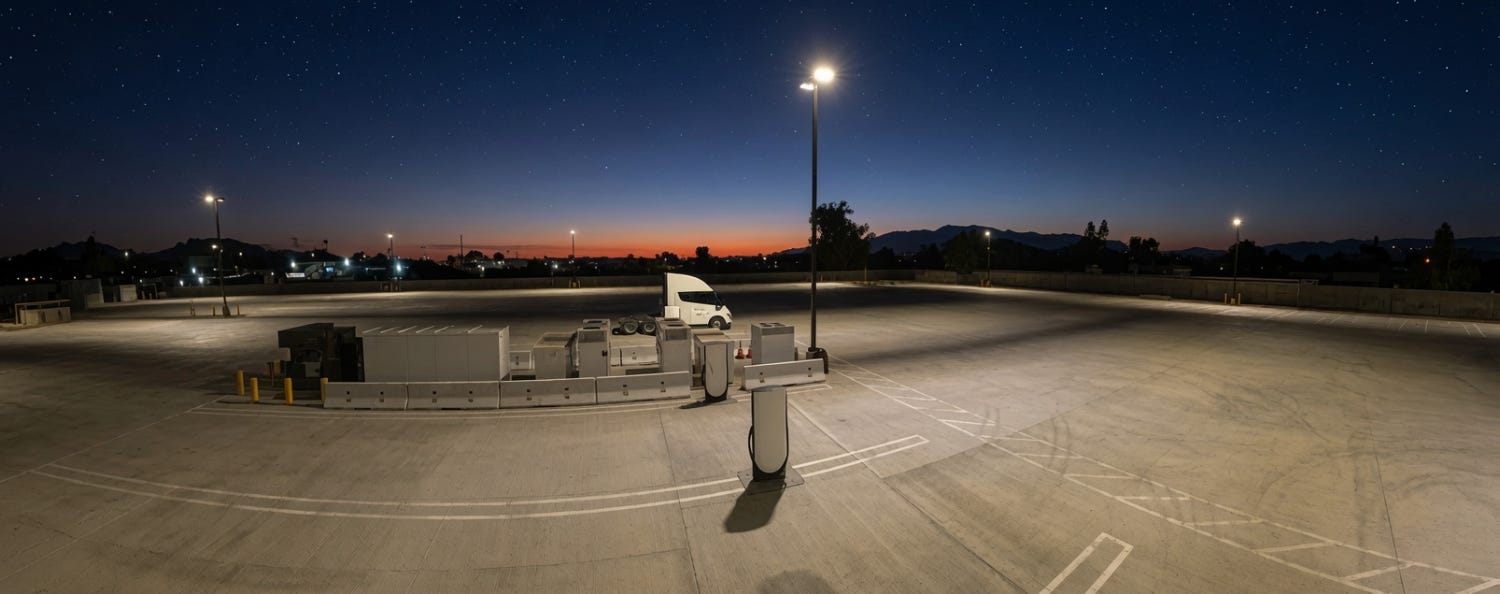
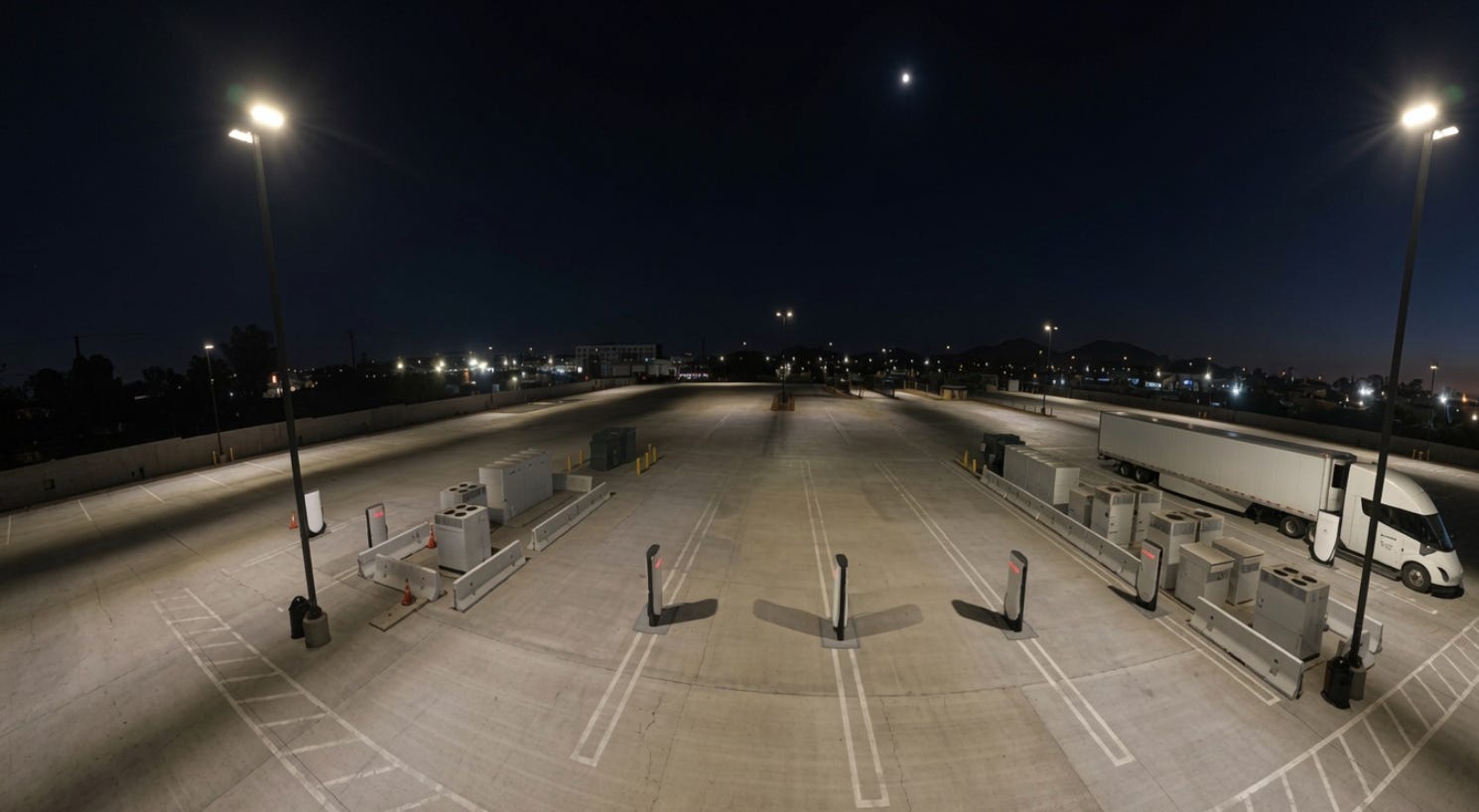
Tesla opened its first full-scale public Megacharger hub for the Semi in Bloomington, California, around July 17, 2026. The site sits at 18434 Valley Blvd in San Bernardino County, about an hour east of Los Angeles and close to the main freight routes that link the Ports of Los Angeles and Long Beach. Tesla Charging confirmed the launch with photos of Semis already using the stalls on a large concrete lot built for Class 8 trucks, complete with charging cabinets, light poles, and pull-through bays.
The station features six dedicated drive-thru stalls, each rated up to 1.2 MW. It uses the Megacharger 2 connector, which is MCS-compatible, and stands open to every Tesla Semi customer. A truck can add hundreds of miles of range in roughly 30 minutes at these rates. This location replaces and expands on the earlier, smaller Ontario test site, marking the first proper public hub in the Megacharger network.
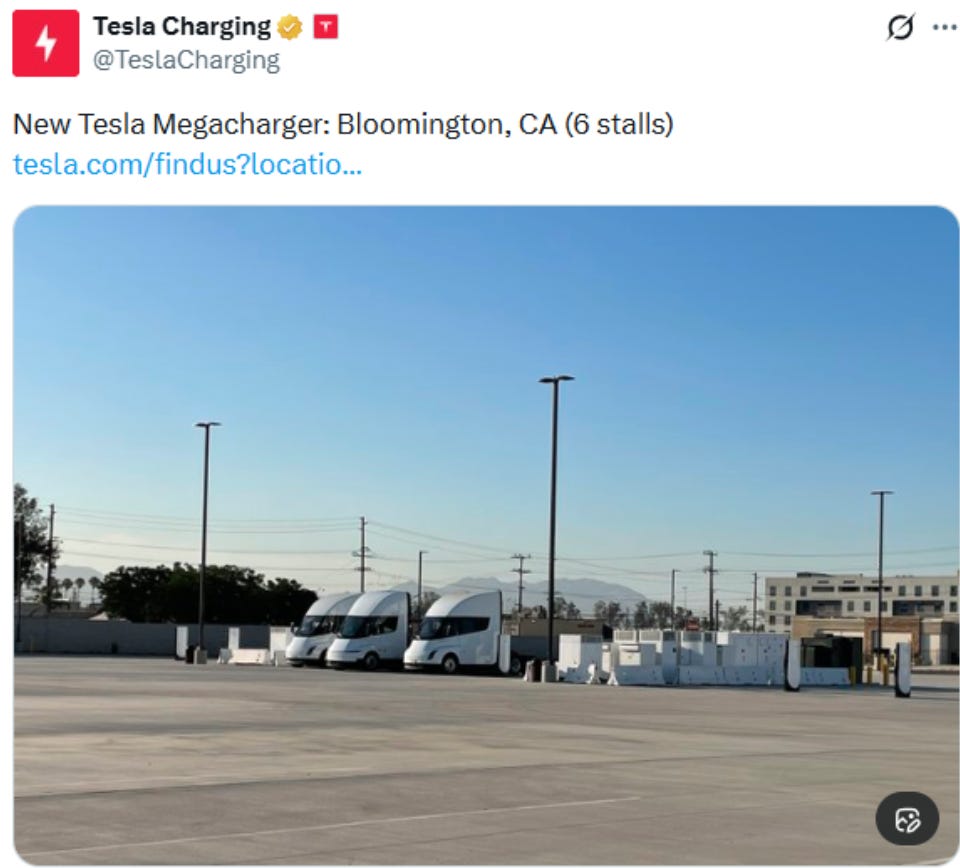
Megachargers supply the high-power charging that the Semi needs for its large battery packs. The higher output shortens stops on long-haul and regional runs, keeping trucks productive across busy corridors. The network has grown alongside Semi production and early customer deliveries, and Bloomington now gives Southern California fleets a reliable public option right where freight volumes are highest.
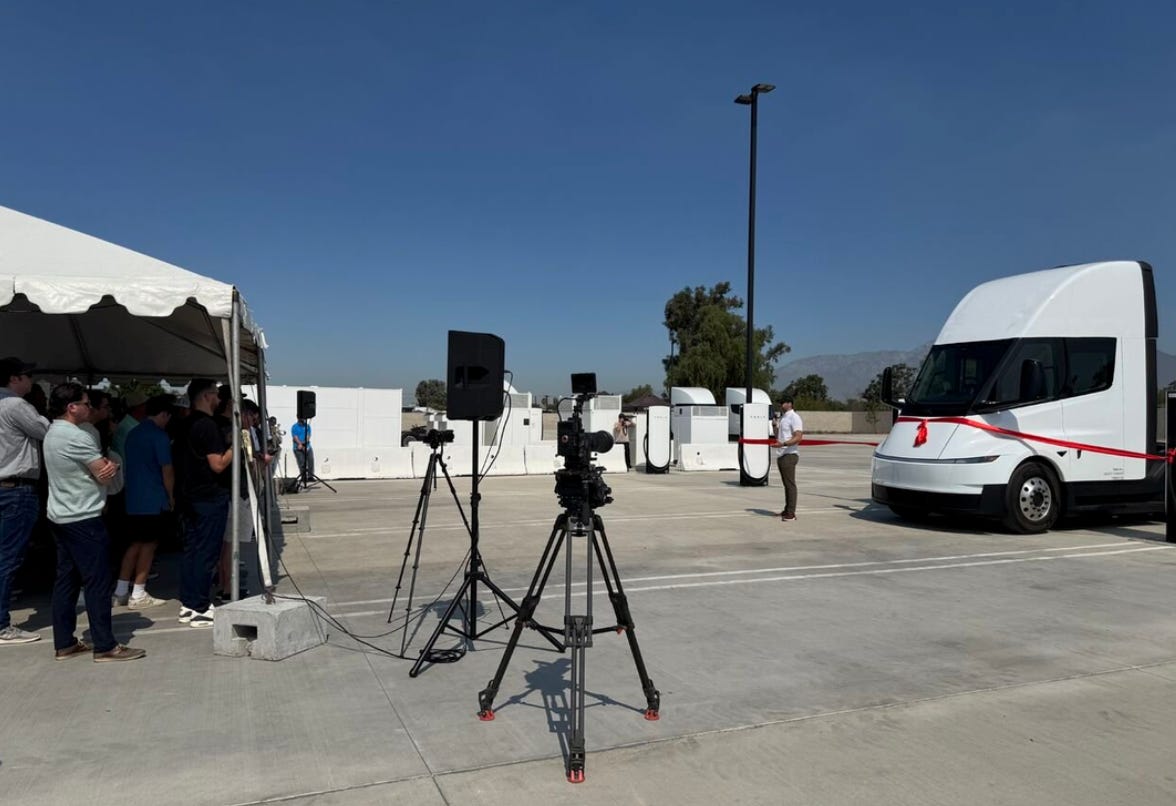
Owners following the Semi program will see clear progress in the commercial side of the business. Recent sightings show Tesla Semis hauling full loads of Cybercabs, and @ElonMusk has said Full Self-Driving software for the truck should arrive by the end of this year or early next. He noted the work will follow the safety advances already under way for the Model 3, Model Y, and Cybercab. A public hub like this one supports those plans by giving operators a practical place to charge while the vehicles handle both current hauling work and upcoming software testing.
The Megacharger footprint remains smaller than the passenger Supercharger system, yet each new station strengthens the link between vehicle production, software development, and daily operations. For Silicon Valley owners watching Tesla’s heavy-duty efforts, the Bloomington opening adds a concrete, usable piece of infrastructure to the expanding electric trucking network.